Refinancing Strategy: How to Optimise in a Falling-Rate Environment
Aug 14, 2025

Mortgage rates are falling — is it time to refinance? Learn how to calculate your break-even point, avoid common pitfalls, and make smarter refinancing decisions.
Why Falling Rates Create a Refinancing Opportunity
When the Reserve Bank of New Zealand (RBNZ) cuts the Official Cash Rate (OCR), banks usually follow by reducing mortgage rates. That’s when refinancing opportunities appear. A lower interest rate can mean lower repayments, but it can also be a strategic moment to reduce your overall interest costs or pay your loan off faster.
Advisers are warning that many homeowners still sitting on older fixed rates could be “missing out” on thousands in potential savings as new, cheaper rates flow through the market. Falling rates aren’t just about reducing monthly pressure — they can help you reshape your loan for long-term benefit.
Read our guide on Fixed vs Floating Mortgage NZ & Which Is Right for You.
What to Consider Before Refinancing in a Falling-Rate Environment
Before making a move, lets weigh up the trade-offs:
Break fees: If you’re still mid-term on a fixed rate, your lender may charge a break fee for early exit. The potential savings need to outweigh this cost.
Cashback clawbacks: If your last loan came with a cashback incentive, refinancing too early may mean repaying that benefit.
Equity and LVR checks: Lenders will re-assess your loan-to-value ratio (LVR) and affordability as if you’re applying fresh. If property values have softened, you might not qualify for the same terms.
Timing: The sweet spot is usually when your fixed term expires or when market rates fall substantially below your current rate.
Your long-term goals: Refinancing can be more than just chasing lower payments. It can help you access equity, shorten your loan, or switch to a more flexible loan structure.
Smart Strategy Options When Rates Are Falling
Refinancing isn’t one-size-fits-all. Your strategy depends on your situation and risk appetite:
Refinance to a lower rate: The simplest option. You move to a lower interest rate with a new lender or stay with your current one.
Shorten your loan term: Keep your repayments the same while reducing your interest rate — you’ll pay your loan off faster and save thousands in total interest.
Change your loan structure: Consider switching to products with offset or redraw features for more flexibility.
Split your loan: Fix part of it to lock in savings and leave the rest floating to benefit from potential further rate drops — a good hedge in uncertain markets.
Wait if it doesn’t add up: If break costs are high or you plan to sell soon, it may be better to hold off until your current term ends.
Know Your Numbers: The Break-Even Calculation
Before refinancing, you need to know when the savings start outweighing the costs. The break-even point shows how many months it takes for lower repayments to cover any switching and break fees.
For example: if your current rate is 5.5%, and market rates have dropped to 4.5%, that’s roughly 1% saved — about $5,000 a year on a $500,000 loan. If switching costs total $3,000, your break-even period is around 7–8 months.
If you plan to stay in your home longer than that, refinancing may make financial sense.
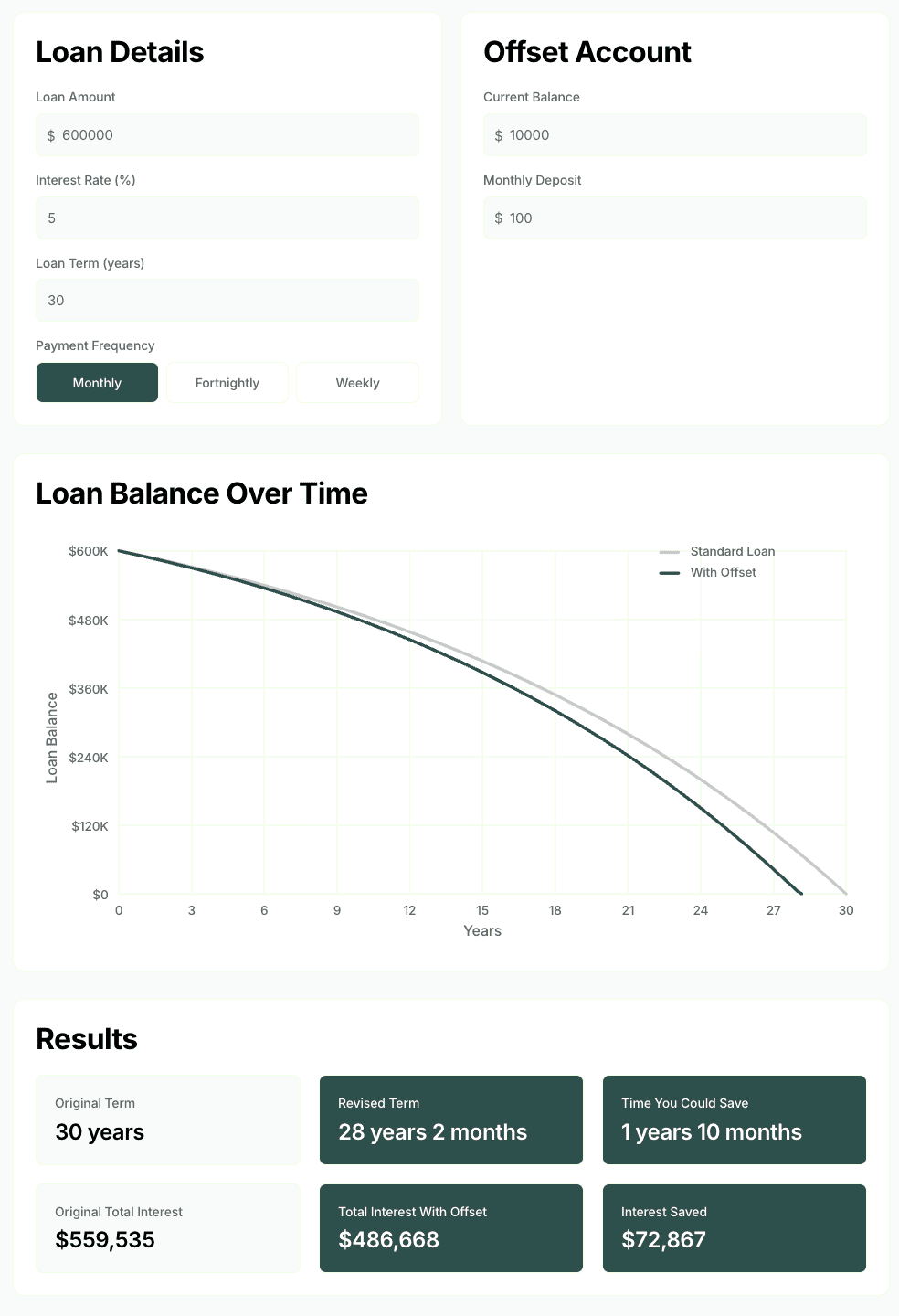
To make this easy, use our Refinancing Break-Even Calculator - simply enter your loan balance, current and new rates, and estimated costs. It will show you your monthly savings, break-even months, and long-term savings potential.
Risks to Watch and Mistakes to Avoid
Even in a falling-rate market, refinancing has traps to avoid:
Locking into a long fixed term when rates could still fall further.
Ignoring break fees, cashback clawbacks, or legal and valuation costs.
Extending your loan term back to 30 years, lowering repayments but increasing total interest.
Chasing the lowest headline rate without checking flexibility or redraw options.
Refinancing just before selling and you’ll likely lose out overall.
Failing to model what happens if rates rise again in 12–24 months.
What This Means for NZ Homeowners Now
With the RBNZ continuing to ease monetary policy, the window for refinancing savings is widening. Homeowners who fixed at peak rates could save significantly by refixing or refinancing now — particularly if their fixed term is expiring soon.
Here’s what to do:
Check your fixed expiry date and compare it to current market rates.
Calculate your break-even point before making the move (use our Refinancing Break-Even Calculator).
Reassess your loan structure — maybe it’s time to move to a split or flexible loan.
Use the opportunity to shorten your loan term or free up cash flow for other priorities.
For property investors, refinancing can also unlock better leverage and improve after-tax returns, but the analysis should include structure, ownership, and future rate scenarios.
Our Take in Short
Refinancing in a falling-rate market isn’t just about saving money today it’s about strengthening your financial position for tomorrow. The key is knowing your numbers and timing your move right.
If your loan is expiring or your current rate is more than 1% above the market, you’re likely paying more than you need to.
Use our Refinancing Break-Even Calculator to find out whether refinancing makes sense for you, and then talk to one of our mortgage advisers to model the scenarios and choose the best structure for your goals.
Contact us